Skip to content
✉ info@freightquotechina.com |📞 +86 18138342527
💬 WeChat: lunjie1120 WhatsApp Us →
            Get a Quote
💬 WhatsApp Us Now
Category

Shipping Tools

The freight leg out of China is largely standardised. What varies by destination is the tariff, the tax, the mandatory pre-shipment paperwork and the inland distance.

Briefing

Shipping Tools — what decides the number

The freight leg out of China is largely standardised. What varies by destination is the tariff, the tax, the mandatory pre-shipment paperwork and the inland distance.

Duty is calculated on the destination tariff code and the declared customs value, so the same goods can land at very different rates in two neighbouring markets. Preference matters here: China has agreements in force with the RCEP members, ASEAN, Australia, New Zealand, South Korea, Switzerland, Chile and Peru, among others. Where one applies, a valid certificate or origin declaration can remove the duty entirely — but the certificate has to be correct and issued in time, and a missing one cannot be retrofitted after clearance.

Several markets require documentation that must exist before the cargo sails. Nigeria requires SONCAP, Kenya, Tanzania and Uganda require PVoC, Saudi Arabia requires SASO or SABER, and a number of West and Central African ports require a cargo tracking note (ECTN, BESC or CTN). These are pre-shipment instruments by design. Arranging them after departure ranges from expensive to impossible, and the penalty is normally assessed at the destination port where you have the least leverage.

Finally, look past the port. A quote to the port of discharge and a quote to your door can differ enormously depending on inland haulage distance, whether the address takes a full-size truck, and whether the destination charges a chassis or congestion fee. For landlocked destinations the inland leg is often the largest single line in the landed cost, and it is the line most often left out of a first quotation.

Key figures at a glance

Shipping Tools — reference figures used when quoting from China
Duty basis Destination HS code and declared customs value
Preference agreements RCEP · ASEAN–China · Australia · New Zealand · Korea · Switzerland · Chile · Peru
Pre-shipment certificates SONCAP (Nigeria) · PVoC (Kenya, Tanzania, Uganda) · SASO/SABER (Saudi Arabia)
Cargo tracking notes ECTN / BESC / CTN for many West and Central African ports
European Union EORI · import VAT at entry · IOSS for B2C ≤ €150
United States Importer of record · customs bond · ISF 10+2
Timing rule Conformity and tracking documents must be issued before departure
Watch the inland leg Often the largest line for landlocked destinations

Standard industry references (Incoterms 2020, IATA volumetric divisors, ISO container internal dimensions, SOLAS Chapter VI, ISPM 15). Rates, surcharges and free time are commercial terms and vary by carrier, lane and season — confirm them on your own quotation.

Where these shipments leave from

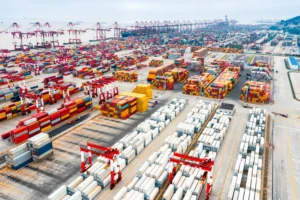
Our bookings originate at the Chinese gateways below. Which one your cargo uses depends on where the factory sits, the mode and the space available that week.

Seaport CNSHA

Port of Shanghai

Yangshan and Waigaoqiao terminals; the highest-frequency gateway for Europe and North America.

31.2304° N 121.4737° E

Seaport CNNGB

Port of Ningbo-Zhoushan

Yangtze Delta alternative to Shanghai, often with shorter yard queues at peak.

29.8683° N 121.5440° E

Seaport CNYTN

Port of Shenzhen — Yantian

Primary South China gateway for Pearl River Delta factories.

22.5850° N 114.2700° E

Seaport CNNSA

Guangzhou — Nansha

Strong on Africa, Middle East and Southeast Asia services.

22.7700° N 113.6000° E

Airport CAN

Guangzhou Baiyun International

Largest South China freighter base; the default for Pearl River Delta air cargo.

23.3924° N 113.2988° E

Airport SZX

Shenzhen Bao'an International

Electronics and battery-capable channels close to the Shenzhen supply base.

22.6393° N 113.8108° E

Airport PVG

Shanghai Pudong International

China's busiest cargo airport; widest long-haul network.

31.1443° N 121.8083° E

Rail terminal Xi'an

Xi'an International Port

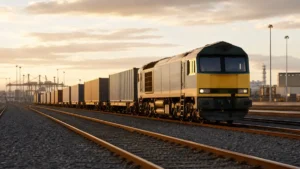
Highest block-train frequency to Europe.

34.3416° N 108.9398° E

Rail terminal Chengdu

Chengdu International Railway Port

Western China gateway; strong Poland and Germany services.

30.5728° N 104.0668° E

Shipping Tools

14 posts

Frequently asked

Why is the duty rate different for the same product in two countries?

Because duty is set by each destination's own tariff schedule against its own code, and because trade preferences differ. Where China has an agreement in force with the destination, a valid origin certificate can reduce or remove the duty; without one the most-favoured-nation rate applies.

Which documents have to be arranged before the cargo leaves China?

Any pre-shipment conformity certificate or cargo tracking note — SONCAP, PVoC, SASO or SABER, ECTN, BESC or CTN — plus any preference certificate you intend to claim. All of these are difficult or impossible to obtain retroactively.

Is a quote to the port the same as a quote to my door?

No, and the gap can be large. Inland haulage, delivery access, chassis and congestion fees and the customs entry all sit between the two. For landlocked destinations the inland leg is frequently the biggest single component of landed cost.

Does RCEP remove import duty on Chinese goods?

It can, for goods that meet the origin rules and are accompanied by a valid RCEP certificate or origin declaration, moving between member states. It is not automatic — the origin criteria have to be satisfied and evidenced.