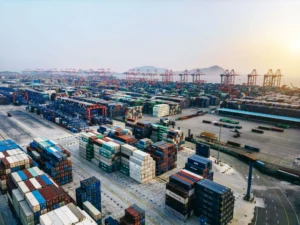
Arctic Express Trims 22 Days Off Ningbo-Europe Freight
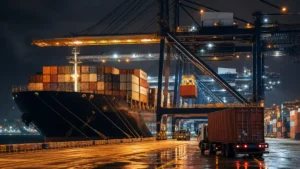
The Ningbo-Europe Arctic Express cuts ocean freight transit from 40 days to as little as 18,…
The freight leg out of China is largely standardised. What varies by destination is the tariff, the tax, the mandatory pre-shipment paperwork and the inland distance.
Duty is calculated on the destination tariff code and the declared customs value, so the same goods can land at very different rates in two neighbouring markets. Preference matters here: China has agreements in force with the RCEP members, ASEAN, Australia, New Zealand, South Korea, Switzerland, Chile and Peru, among others. Where one applies, a valid certificate or origin declaration can remove the duty entirely — but the certificate has to be correct and issued in time, and a missing one cannot be retrofitted after clearance.
Several markets require documentation that must exist before the cargo sails. Nigeria requires SONCAP, Kenya, Tanzania and Uganda require PVoC, Saudi Arabia requires SASO or SABER, and a number of West and Central African ports require a cargo tracking note (ECTN, BESC or CTN). These are pre-shipment instruments by design. Arranging them after departure ranges from expensive to impossible, and the penalty is normally assessed at the destination port where you have the least leverage.
Finally, look past the port. A quote to the port of discharge and a quote to your door can differ enormously depending on inland haulage distance, whether the address takes a full-size truck, and whether the destination charges a chassis or congestion fee. For landlocked destinations the inland leg is often the largest single line in the landed cost, and it is the line most often left out of a first quotation.

| Duty basis | Destination HS code and declared customs value |
|---|---|
| Preference agreements | RCEP · ASEAN–China · Australia · New Zealand · Korea · Switzerland · Chile · Peru |
| Pre-shipment certificates | SONCAP (Nigeria) · PVoC (Kenya, Tanzania, Uganda) · SASO/SABER (Saudi Arabia) |
| Cargo tracking notes | ECTN / BESC / CTN for many West and Central African ports |
| European Union | EORI · import VAT at entry · IOSS for B2C ≤ €150 |
| United States | Importer of record · customs bond · ISF 10+2 |
| Timing rule | Conformity and tracking documents must be issued before departure |
| Watch the inland leg | Often the largest line for landlocked destinations |
Standard industry references (Incoterms 2020, IATA volumetric divisors, ISO container internal dimensions, SOLAS Chapter VI, ISPM 15). Rates, surcharges and free time are commercial terms and vary by carrier, lane and season — confirm them on your own quotation.
Our bookings originate at the Chinese gateways below. Which one your cargo uses depends on where the factory sits, the mode and the space available that week.
Yangshan and Waigaoqiao terminals; the highest-frequency gateway for Europe and North America.
31.2304° N 121.4737° E
Yangtze Delta alternative to Shanghai, often with shorter yard queues at peak.
29.8683° N 121.5440° E
Primary South China gateway for Pearl River Delta factories.
22.5850° N 114.2700° E
Strong on Africa, Middle East and Southeast Asia services.
22.7700° N 113.6000° E
Largest South China freighter base; the default for Pearl River Delta air cargo.
23.3924° N 113.2988° E
Electronics and battery-capable channels close to the Shenzhen supply base.
22.6393° N 113.8108° E
China's busiest cargo airport; widest long-haul network.
31.1443° N 121.8083° E
Highest block-train frequency to Europe.
34.3416° N 108.9398° E
Western China gateway; strong Poland and Germany services.
30.5728° N 104.0668° E
The Ningbo-Europe Arctic Express cuts ocean freight transit from 40 days to as little as 18,…
The China-Europe Arctic route can cut a Shanghai–Rotterdam sailing by about 3,000 miles and 15 days…
The Ningbo to Europe Arctic route is a scheduled seasonal container service that cuts Northern Europe…
A practical guide for B2B importers navigating international shipping duties, taxes, and customs clearance, covering who…
A practical B2B guide to understanding and avoiding oversized cargo surcharges, overweight fees, remote area charges,…
A practical B2B guide to sea freight DDP from China—how it works, what's included, LCL/FCL options,…
If your cargo includes batteries, liquids, powders, magnets, or branded goods, standard freight channels won't accept…
An essential guide for business owners and operators new to international freight. Covers pre-shipment requirements and…
A practical sea freight DDP guide for Amazon FBA sellers moving goods from China to the…
This beginner-friendly guide walks you through the entire international freight shipping process, from preparing your shipment…
Shipping from China to Kenya guide covering Mombasa port, KRA customs procedures, KEBS standards, import duty…
China to Germany shipping guide for importers. Hamburg port vs air freight, EORI registration, German customs…
Because duty is set by each destination's own tariff schedule against its own code, and because trade preferences differ. Where China has an agreement in force with the destination, a valid origin certificate can reduce or remove the duty; without one the most-favoured-nation rate applies.
Any pre-shipment conformity certificate or cargo tracking note — SONCAP, PVoC, SASO or SABER, ECTN, BESC or CTN — plus any preference certificate you intend to claim. All of these are difficult or impossible to obtain retroactively.
No, and the gap can be large. Inland haulage, delivery access, chassis and congestion fees and the customs entry all sit between the two. For landlocked destinations the inland leg is frequently the biggest single component of landed cost.
It can, for goods that meet the origin rules and are accompanied by a valid RCEP certificate or origin declaration, moving between member states. It is not automatic — the origin criteria have to be satisfied and evidenced.
I need three things to price your cargo. Give me sixty seconds and I can quote today.
A freight specialist is looking at it now. You will have a price by email within one working day.