
Norway Offshore Strike Ends as Wage Board Takes Over

Key Figures
This story carries monetary or market figures such as 4 million. They are the kind of detail worth noting up front, then confirming against the original report for exact amounts and scope.
- Market value: 4 million Market context: safeguarding north sea supply Freight Images (15) Norway is western Europe’s largest oil and gas producer, delivering roughly 4 million barrels of oil equivalent daily via pipelines and LNG terminals.
A deal between the union representing Norwegian offshore service workers and the industry’s employer body has halted a strike that disrupted drilling operations and trimmed the country’s petroleum output. SAFE, the labour organisation, and Offshore Norge, the employers’ association, jointly agreed to transfer their wage conflict to a voluntary wage board, effectively ending the work stoppage and an associated lockout. The settlement means personnel will return to their posts as soon as operationally feasible.
Market context: safeguarding north sea supply
Norway is western Europe’s largest oil and gas producer, delivering roughly 4 million barrels of oil equivalent daily via pipelines and LNG terminals. Even a partial reduction in offshore activity can tighten regional energy balances, particularly when markets are already responding to seasonal demand swings or geopolitical supply risks. The strike, which targeted floating rigs and service vessels, arrived at a time when European gas storage levels were being closely watched. By removing the immediate threat of further production curbs, the deal restores a measure of predictability to short-term energy supply fundamentals.
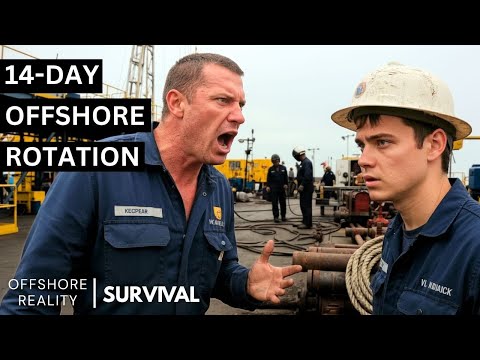
Offshore service providers, including drilling contractors, had warned that prolonged industrial action could delay exploration and well maintenance schedules. Such slippage can eventually feed into lower future output, a concern for a sector where Norway’s petroleum directorate has pointed to declining recovery rates from mature fields. With the strike lifted, marketed production volumes are expected to rebound swiftly, easing any premium that had crept into spot gas or day-ahead power prices linked to Norwegian hydro-thermal interplay.
Dispute resolution framework: how the wage board works
Under Norwegian labour law, parties in an industrial conflict may voluntarily refer a dispute to a wage board – a panel typically composed of legal experts and labour-market economists. This differs from the well-known compulsory arbitration mechanism of the National Wages Board, which the government can impose to stop strikes that endanger life or health. A voluntary board, by contrast, requires mutual consent and often signals a shared interest in avoiding protracted disruption. Once the referral is accepted, the strike and lockout are immediately cancelled, and the board’s subsequent ruling is binding.
The choice of a voluntary board reflects the unique status of Norway’s offshore industry, where the state is both a direct licensee and the regulator. Both SAFE and Offshore Norge are familiar with the process; similar referrals have settled offshore disputes in the past, notably in drilling and catering services. By selecting this route, the parties sidestep the damage of extended downtime while still preserving a formal wage determination mechanism. The board will now examine the competing economic arguments and deliver a wage adjustment to cover the disputed period.
What to watch next: board ruling and operational recovery
The wage board’s timeline is not fixed, but historical cases suggest a decision within weeks. Its ruling will set the wage terms retrospectively and could influence future negotiations across the wider Norwegian continental shelf. Industrial relations analysts will be observing whether the board aligns more closely with the union’s demands or the employers’ offer, as the margin may set a precedent for upcoming talks in other segments of the maritime and energy sectors.
Operationally, the fastest-returning crews will be those on rigs that were kept warm during the stoppage. For cold-stacked units, reactivation may take longer, and any deferred maintenance will need to be rescheduled. The Norwegian Ocean Industry Authority will likely monitor the restart process to ensure safety standards are maintained as activities ramp up. The end of the strike, while positive, leaves open the question of whether the underlying friction over wage structures in a high-cost basin has been addressed or merely deferred to the next bargaining round.
| Aspect | Details |
|---|---|
| Parties | SAFE (union) and Offshore Norge (employer group) |
| Dispute type | Wage negotiations for offshore service workers |
| Resolution method | Voluntary wage board referral, ending strike and lockout |
| Immediate effect | Workers to return; drilling and petroleum output to normalise |
| Market context | Norway is a major European oil/gas supplier; strike added supply pressure |
| Next milestone | Wage board ruling expected within weeks, binding both sides |
Can a voluntary wage board deliver a settlement that prevents future disruptions in Norway’s high-stakes offshore labour market?
Why This Matters
The resolution removes immediate supply-side risk for European gas markets during a period of tight inventory. It also underscores Norway’s reliance on arbitration mechanisms to maintain production continuity in its strategic offshore sector.
FAQ
Who were the parties involved in the strike?
The dispute was between the Norwegian union SAFE, representing offshore service workers, and the employer association Offshore Norge.
How was the strike resolved?
Both sides agreed to refer the wage disagreement to a voluntary wage board, a form of arbitration accepted under Norwegian labor law, which automatically ends the strike and lockout.
What effect did the strike have on Norway’s oil and gas production?
The work stoppage cut into petroleum output and affected offshore drilling activity, though the full scale of production losses was not immediately detailed.
When will workers return to their jobs?
With the deal in place, employees are expected to resume work as soon as practicable, with the timeline depending on operational logistics offshore.
Sources
- SAFE (safe.no)
- Offshore Norge (offshorenorge.no)
Source: Splash247