
Maersk Stops Container Service at Ukraine’s Chornomorsk Port
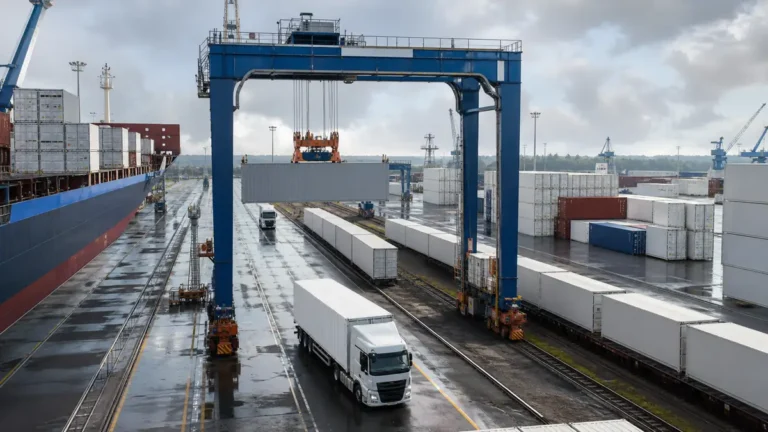
Key Figures
This story carries monetary or market figures such as 1 million. They are the kind of detail worth noting up front, then confirming against the original report for exact amounts and scope.
- Market value: 1 million Ukraine alone accounted for over 1 million TEUs of container throughput annually before recent disruptions, with Chornomorsk regularly handling a double‑digit share of that volume.Grain, metals, and chemicals often move in containers…
Maersk, the world’s largest container shipping line by fleet capacity, has suspended operations at the port of Chornomorsk, a key maritime gateway on Ukraine’s Black Sea coast. The company confirmed the decision recently, though it did not immediately provide details on the reasons behind the move.
Chornomorsk, historically known as Illichivsk, is one of Ukraine’s deepest water ports and handles a substantial portion of the nation’s containerised cargo, alongside dry bulk and liquid shipments. The suspension effectively removes a critical node from Maersk’s regional service network, raising immediate questions about cargo re‑routing and supply chain stability for shippers dependent on Black Sea corridors.
Strategic role of the Black Sea in container trades
The Black Sea basin serves as a vital conduit for container flows linking Europe, the Mediterranean, the Caucasus, and Central Asia. Large feeder vessels relay cargo to and from mega‑alliance hubs in Piraeus, Ambarli, or Tangier, while smaller feeders connect to river and road networks deep into the interior. Ukraine alone accounted for over 1 million TEUs of container throughput annually before recent disruptions, with Chornomorsk regularly handling a double‑digit share of that volume.

Grain, metals, and chemicals often move in containers alongside traditional consumer goods, making the region attractive for carriers seeking balanced head‑haul and back‑haul volumes. Any prolonged absence of a major operator at a core port can tighten slot availability, shift vessel itineraries, and increase reliance on alternative ports such as Odesa or Constanța in neighbouring Romania. Freight forwarders and beneficial cargo owners are already assessing whether schedules can absorb the change without escalating detention and demurrage costs.
Operational and safety standards under scrutiny
While Maersk has not disclosed the specific factors behind the suspension, shipping lines routinely evaluate port risks using frameworks that include security conditions, infrastructure readiness, labour availability, and compliance with international safety codes such as the ISPS Code. The Black Sea region has faced elevated risk profiles in recent years, prompting many carriers to adopt heightened due‑diligence procedures.
Port state control data and industry circulars indicate that Chornomorsk has made substantial investments in quay cranes, yard automation, and IT systems since the early 2010s. Nevertheless, operational continuity depends on a range of variables—from pilotage and towage services to customs clearance times—that can influence a carrier’s decision to temporarily withdraw. Should the suspension stem from a specific incident or compliance shortfall, it could accelerate calls for standardised risk‑assessment protocols across all Black Sea terminals.
What to watch next
Industry observers will closely monitor whether other global carriers, such as MSC or CMA CGM, announce similar adjustments to their Black Sea port rotations. Already, spot container freight rates on routes out of the Black Sea have shown volatility, and any sustained capacity reduction could push Asia‑Europe spot indices higher as shippers compete for limited space.
Logistics providers are advising clients to review contingency plans, including potential trans‑shipment via alternate hubs like Istanbul or Varna. For time‑sensitive cargo, rail bridges connecting Ukraine to central European intermodal terminals may see a short‑term uptick in demand. The situation also highlights the broader vulnerability of single‑port dependencies in emerging market supply chains—a lesson importers learnt during earlier disruptions in the Red Sea and Panama Canal.
| Aspect | Details |
|---|---|
| Company | Maersk (A.P. Moller – Maersk) |
| Port affected | Chornomorsk, Black Sea, Ukraine |
| Service suspended | Container handling operations |
| Reason stated | Not immediately disclosed |
| Potential impact | Re‑routing of cargo, tighter slot availability, possible freight rate increases |
| Alternative trans‑shipment hubs | Odesa, Constanța, Istanbul, Varna |
The suspension leaves unanswered how long the port will remain offline for container operations and whether alternative Black Sea hubs can absorb the displaced volumes without creating regional bottlenecks that ripple through global supply chains.
Why This Matters
Maersk’s withdrawal from Chornomorsk removes a key Black Sea container node, threatening to tighten capacity and raise freight rates on regional routes. The move highlights how geopolitical and operational risks are reshaping carrier port-call strategies, with potential knock-on effects for Europe-Asia supply chains reliant on Ukrainian and Black Sea feeder services.
FAQ
Which company has suspended operations at Chornomorsk?
Maersk, the world’s largest container shipping line, has confirmed the suspension of its operations at the Ukrainian port.
What role does Chornomorsk play in container shipping?
Chornomorsk is one of Ukraine’s deepest Black Sea ports and historically handles a significant share of the country’s container traffic, along with dry bulk and liquid cargo, serving as a regional gateway.
Why did Maersk suspend service?
The company has not publicly disclosed the specific reasons for the suspension, though such decisions often relate to safety, security, or operational assessments.
What could this mean for regional freight rates?
If the suspension persists, it may lead to tighter container slot availability on Black Sea routes and could push spot freight rates higher as shippers compete for limited capacity via alternative ports.
Sources
- Maersk (maersk.com)
- Chornomorsk (en.wikipedia.org)
Source: Bluesky @eu-dk.bsky.social