Supply Chain Leaders Discuss Port Drayage, API Integration and Capacity on FreightWaves Today
The efficiency of global supply chains hinges increasingly on the seamless exchange of data and the smooth movement of containers through congested port terminals. As freight networks face persistent capacity pressures, technology-driven coordination between shippers, carriers and logistics providers has moved from a competitive advantage to a baseline operational necessity.
Industry leaders tackled these interlocking themes during Monday’s edition of FreightWaves Today, the live broadcast that serves as a daily pulse check on freight markets. The conversation zeroed in on port drayage execution, network optimization strategies and the growing role of API-driven integrations in connecting fragmented supply chain ecosystems.
Port Drayage and Capacity Pressures
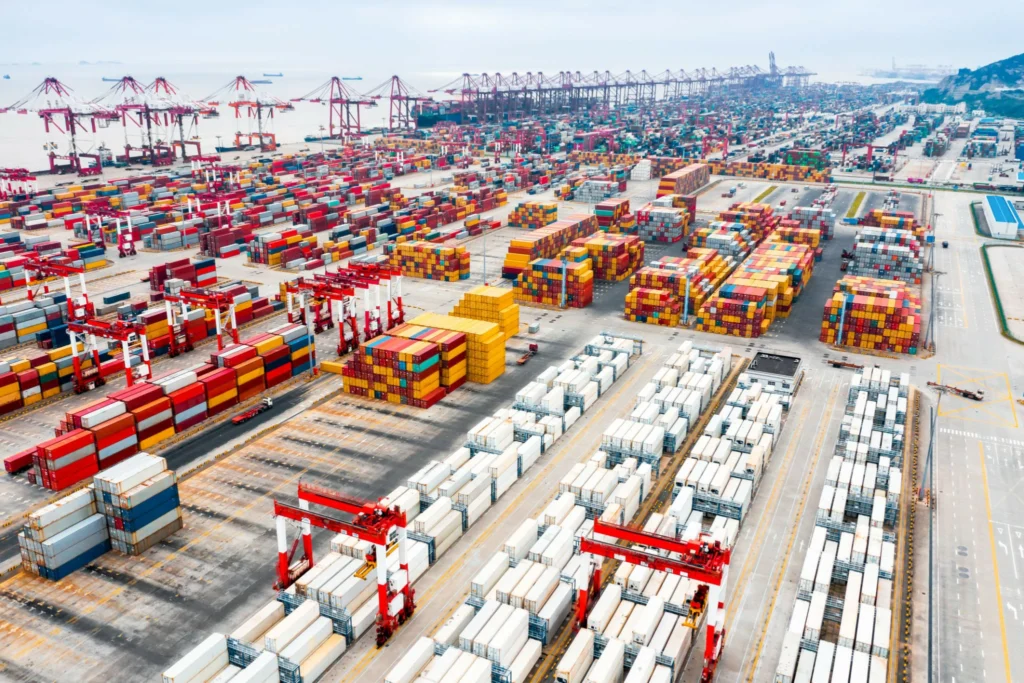
Port drayage — the short-haul movement of containers between marine terminals and inland facilities — remains one of the most friction-prone legs in international logistics. Congestion at major gateways can cascade into missed transloading windows, demurrage charges and delivery delays that ripple across entire supply chains.
During the broadcast, participants examined how capacity constraints at key port complexes are reshaping drayage procurement. With chassis shortages and terminal appointment systems adding layers of complexity, shippers are increasingly seeking visibility into real-time asset location and turnaround times. The discussion highlighted that traditional phone-and-email coordination is giving way to digital platforms that match loads with available drayage capacity, reducing dwell times and improving asset utilization.
The capacity conversation extended beyond physical equipment. Attendees noted that labor availability at ports, warehouse receiving hours and driver retention are all components of a drayage capacity equation that cannot be solved by simply adding more trucks. Network-level thinking, where capacity is viewed as a balanced system of nodes and flows, dominated the technical portion of the exchange.
Network Optimization Through Technology
Moving freight efficiently requires orchestrating thousands of decisions across multiple parties. Network optimization, a discipline once confined to academic supply chain planning, is now being democratized through cloud-based tools that ingest live data streams from transportation management systems, ocean carriers and port community systems.
API-driven integrations were a focal point of the technology discussion. Rather than relying on batch electronic data interchange or manual data entry, application programming interfaces allow systems to communicate instruction-level data in sub-second timeframes. This capability is critical for dynamic rerouting, automatically rescheduling pickups when vessels are delayed or reallocating inventory to bypass congested nodes. Speakers emphasized that the value of APIs lies not only in speed but in the structured, machine-readable data they deliver — enabling predictive analytics and automated exception handling.
The dialogue also touched on how shippers are moving beyond static routing guides. By combining API-fed visibility data with algorithmic decision engines, freight networks can adapt in near real-time to disruptions, balancing cost and service on a shipment-by-shipment basis. This shift places a premium on clean, interoperable data — a theme that recurred throughout the hour.
How Standards Shape Integration
Underpinning API connectivity is a quiet but essential layer of industry standards. The Digital Container Shipping Association and other bodies have been driving adoption of common data definitions for milestones such as vessel arrival, gate-out and delivery. Without such standards, each API integration becomes a custom engineering project, slowing deployment and increasing cost.
The freight community heard how carriers and technology vendors are converging on a shared framework for event tracking and document exchange. This convergence is expected to accelerate as regulatory programs like the U.S. Federal Maritime Commission’s Maritime Transportation Data Initiative push for more transparent data sharing. Procurement teams, in turn, are beginning to include API readiness as a criterion in carrier and forwarder sourcing decisions, much as they once required EDI capability.
Insights from the C-Suite
While specific names were not disclosed in the broadcast’s promotional materials, the panel featured executives whose daily responsibilities span logistics operations, technology strategy and commercial procurement. Their conversation reflected the reality that no single function can solve drayage delays or network inefficiencies in isolation. The cross-functional dialogue underscored that aligning technology investments with operational workflows is essential for capturing the value promised by digital freight platforms.
Speakers acknowledged that the hype around artificial intelligence and machine learning must be grounded in practical use cases — such as predicting container availability windows or recommending alternative routings when drayage capacity tightens. The consensus was that technology is an enabler, but successful execution still depends on collaborative relationships, clear communication protocols and a willingness to rethink legacy processes.
The broadcast closed with a call for continued investment in interoperability tools, suggesting that the freight industry is entering a phase where connectivity itself becomes a competitive differentiator rather than a back-office utility.
FreightWaves Today airs weekday mornings and provides a forum for real-time discussion of the forces shaping freight markets. Monday’s episode placed port drayage, network optimization and API-driven technology at the center of the industry’s agenda.
Why This Matters
Port drayage and system fragmentation remain stubborn bottlenecks in global logistics. Elevating the conversation around API standards and real-time visibility tools signals that the industry is moving beyond piecemeal digital adoption toward integrated, data-driven operations. For procurement and logistics professionals, this shift influences carrier selection criteria, technology investment roadmaps and the path to building resilient freight networks.
FAQ
Who participated in the FreightWaves Today discussion on port drayage?
The broadcast featured industry leaders from logistics and technology roles, though the promotional materials did not name individual executives. Their expertise spanned operations, technology strategy and commercial procurement, reflecting the cross-functional nature of modern freight challenges.
What specific freight topics were covered on Monday’s show?
The conversation focused on three main areas: port drayage capacity and execution, network optimization through digital tools, and API-driven integrations for seamless data exchange. Participants also discussed how these technical capabilities translate into practical supply chain improvements.
Why are API-driven integrations considered important for freight networks?
APIs enable instantaneous, structured data exchange between disparate systems, which is essential for dynamic rerouting, real-time shipment tracking and automated exception handling. Unlike traditional batch processing, API connectivity supports the agility needed to respond to port delays, equipment shortages and other disruptions.
How does network optimization affect day-to-day logistics operations?
Network optimization uses live data and algorithms to decide the best routing, mode and timing for shipments. It helps shippers balance cost and service dynamically, reduce empty miles, and avoid congested hubs, ultimately improving reliability and lowering supply chain costs.
Sources
Source: news – FreightWaves