
US Public Container Line Proposed to Counter Foreign Shipping Grip
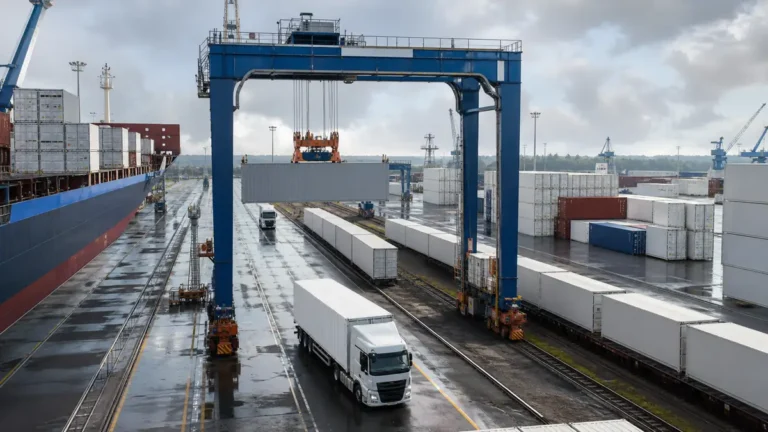
Instead of continuing to rely solely on foreign-owned ocean carriers that dominate trans-Pacific and global trade lanes, the United States is being urged to create a government-backed container shipping line. This shift from passive dependence to active state participation aims to secure supply chains and protect American economic interests.
Renewed Calls for a National Fleet
For years, US-flagged container ships have been a niche presence, with most American importers and exporters booking space on vessels operated by European and Asian giants. Now, policymakers are advocating for a publicly owned alternative. The proposal envisions a carrier that could serve as a strategic asset, especially during crises when foreign lines may prioritize other markets.
Foreign Dominance in Global Liner Shipping
The top global carriers—Maersk, MSC, CMA CGM, COSCO, and Hapag-Lloyd—are all foreign-owned, and together they control the majority of container capacity. None are US-based. This concentration has become more pronounced after industry consolidation. During the pandemic, record freight rates and equipment shortages highlighted American shippers’ vulnerability. A public line would provide a domestic option, potentially stabilizing rates and ensuring space for US exports.
How a Public Line Might Work
Advocates suggest modeling it after existing government-owned carriers like those in some other nations, or as a public-private partnership. It could initially focus on strategic routes, such as the Asia-US trade lane, with modern, fuel-efficient ships. Funding could come from a combination of federal appropriations and user fees, with the line required to operate on a commercially sustainable basis under the oversight of the Federal Maritime Commission.
Industry and Economic Implications
A US public container line could reshape competition. Some experts worry about market distortions or pushback from trade partners, but proponents argue it would enhance national security and reduce reliance on a handful of foreign-controlled carriers. It might also spur job creation in US ports and shipbuilding. Conversely, it would require significant capital and skilled personnel, which the country has been lacking since the decline of its merchant marine.
Historical Context and Recent Precedents
The US once operated a government-owned shipping line, but it was privatized. The pandemic and recent supply chain disruptions have revived interest in state-led shipping. Other countries, like China with COSCO Shipping, have demonstrated how a state-backed carrier can grow to global prominence. However, critics caution about the costs and the potential for inefficiency.
Legislative Outlook
While no bill has been enacted, the call reflects growing bipartisan frustration with foreign carrier dominance. Hearings may explore the feasibility of a public option as part of broader maritime reform.
| Aspect | Details |
|---|---|
| Proposal | Launch a US public container shipping line |
| Current Foreign Dominance | Top carriers: Maersk, MSC, CMA CGM, COSCO |
| Motivation | Supply chain security, rate stability, export competitiveness |
| Potential Model | Public-private partnership, FMC oversight, focus on strategic routes |
| Challenges | High startup costs, crew shortages, market resistance |
The debate over a national container fleet underscores a pivotal rethinking of America’s maritime strategy, where commercial shipping intersects with national security. Whether the proposal advances will depend on legislative will and industry buy-in, but it signals a growing demand for greater self-reliance in global logistics.
Why This Matters
The push for a US public container line represents a fundamental challenge to the current structure of global maritime trade, where a handful of foreign-owned carriers control the vast majority of ocean freight capacity. If enacted, it could alter competitive dynamics, potentially lowering shipping costs for American businesses while raising concerns about government intervention in a traditionally commercial sector. The outcome could influence how other nations approach strategic shipping assets.
FAQ
What is the proposed US public container shipping line?
It is a proposal for the United States to establish a government-owned or publicly backed container shipping carrier. The goal is to provide an American-flagged alternative to foreign-dominated ocean freight services, ensuring reliable capacity for US importers and exporters.
Why is foreign carrier dominance a concern?
The global container shipping market is controlled by a few large foreign carriers, none based in the US. This concentration can lead to higher freight rates, limited space for US exports, and supply chain vulnerabilities during global disruptions, such as the COVID-19 pandemic.
How would a public line operate?
Details remain conceptual, but it could function as a commercial entity with government oversight, perhaps modeled as a public-private partnership. It might initially deploy on key trade lanes like trans-Pacific routes, aiming to be self-sustaining while serving national economic interests.
What are the main challenges to launching such a line?
Significant hurdles include the high capital cost of acquiring vessels, the shortage of US-flagged merchant marine personnel, potential opposition from existing carriers and trade partners, and concerns over government efficiency in running a commercial enterprise.
Sources
- Maersk (maersk.com)
- MSC (msc.com)
- COSCO (cosco.com)
- Federal Maritime Commission (fmc.gov)
Source: TradeWinds News