
Shelling Prompts Maersk to Shut Chornomorsk Terminal
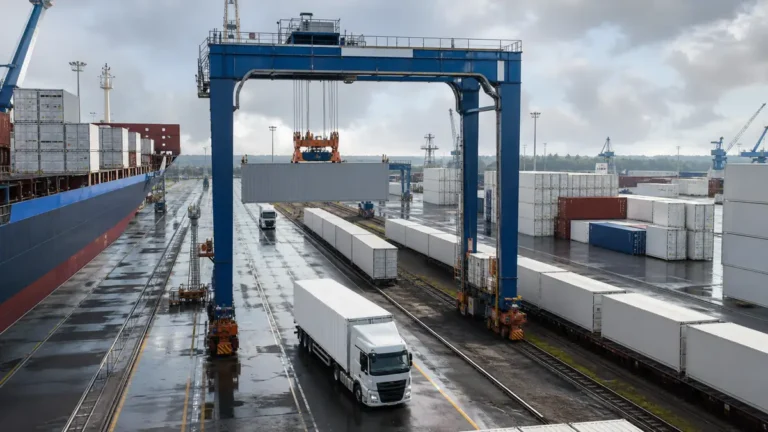
Until recently, Maersk’s container ships maintained a precarious schedule through Chornomorsk, a key hub on Ukraine’s Black Sea coast, navigating the risks that have defined regional trade for over two years. A sudden escalation in military activity—specifically shelling near the terminal—has now forced the carrier to suspend operations entirely, marking a sharp reversal for a port that had remained open despite the broader conflict.
The Danish shipping giant confirmed the temporary closure, citing the safety of staff and cargo as the immediate priority. While the company did not detail the extent of damage, the decision underscores the increasing volatility in a corridor that handles a significant share of Ukraine’s containerised goods.
Market Context
Chornomorsk sits just south of Odesa and, together with nearby Pivdennyi, forms a trio of deep-water ports that have been critical lifelines for Ukrainian exports since the beginning of the invasion. Despite periodic attacks, the port had been operating under the protections of the Black Sea Grain Initiative and subsequent maritime safety arrangements, attracting a trickle of commercial vessels alongside humanitarian food shipments.
For global container shipping, the suspension comes at a delicate moment. Maersk had gradually rebuilt some Black Sea feeder services over the past year, responding to client demand for direct connections to Ukraine. The halt will not only delay inbound consumer goods and industrial inputs but also complicate outbound flows of agricultural products, steel, and other commodities that often move in containers. Regional freight rates, which had started to soften after an initial war-driven spike, could see renewed upward pressure as shippers scramble for alternative routing via Constanța (Romania) or overland links to European hubs.
Other carriers, including Mediterranean Shipping Company (MSC) and CMA CGM, have maintained limited Black Sea calls in similar fashion. Their response to the latest security incident will be closely monitored, as any wave of suspensions could tighten capacity and lift spot rates across the entire Eastern Mediterranean and Black Sea basin.
Technical or Standards Implications
The decision to halt operations at Chornomorsk brings into focus the evolving safety protocols for commercial shipping in conflict zones. War risk insurance policies, typically reassessed after each major incident, could see premiums rise for vessels calling at Ukrainian ports. Such policies often include clauses that void coverage if a ship remains in a dangerous area beyond a specified time, which may have influenced Maersk’s swift action.
From a standards perspective, the incident may accelerate discussions within the International Maritime Organization (IMO) about guidelines for port call risk assessments. Shipping companies already rely on private security advisors and real-time tracking data, but the fragmented nature of threat intelligence means that even minor miscalculations can expose crews to danger. The Chornomorsk shelling highlights the need for more formalised, shared threat assessment protocols—perhaps under a UN-led framework—to allow coordinated, safe passage for commercial traffic.
Terminal operators, too, face technical challenges: sustaining cargo-handling equipment under repeated threats requires hardening of infrastructure, from blast shields to underground storage. While Chornomorsk had made some investments in resilience, the latest event could spur a broader review of port design standards in high-risk zones.
What to Watch Next
Maersk’s advisory suggests the suspension will remain in effect until a thorough security review is completed. That timeline could stretch from days to weeks, depending on the military situation around Odesa and the willingness of Ukrainian authorities to augment air defences and surveillance around the port.
Shippers with goods already en route may face demurrage and detention charges, and some will likely try to reroute containers to Constanța or even to Polish Baltic ports via rail. The next checkpoint is Maersk’s next customer advisory, expected within the coming week, which will clarify whether the terminal’s closure will extend to all of its Black Sea services or remain confined to Chornomorsk.
Meanwhile, the insurance market’s response—particularly the London marine insurance community’s stance on war risk rates for Ukrainian ports—will be a bellwether. An uptick in premiums could effectively price out smaller operators, further concentrating Black Sea cargo in the hands of larger carriers with deeper risk appetite. Ultimately, the resumption of normal operations hinges on a durable ceasefire and credible security guarantees, a scenario that remains uncertain.
| Aspect | Details |
|---|---|
| Shipping line | Maersk (A.P. Moller-Maersk) |
| Port | Chornomorsk, Ukraine (Black Sea) |
| Reason for suspension | Shelling near terminal; safety of personnel and cargo |
| Previous status | Limited container feeder services operating under protective frameworks |
| Immediate market impact | Potential freight rate increases, cargo diversions to Constanța or overland routes |
| Next checkpoint | Maersk security review update expected within the week |
| Broader implications | Possible rise in war risk premiums, renewed focus on IMO safety guidelines for conflict zones |
Why This Matters
The suspension underscores how fragile the Black Sea trade corridor remains, with even sporadic shelling capable of halting major container services. It highlights the interdependence of regional security, insurance frameworks, and global supply chains, potentially triggering higher freight costs and longer transit times for European and Middle Eastern importers reliant on Ukrainian ports.
FAQ
Why did Maersk suspend operations at Chornomorsk?
Maersk suspended operations at the Chornomorsk container terminal due to shelling near the port, which posed a direct risk to the safety of its staff and cargo. The company stated that the suspension is temporary until a security review can be completed.
How does this affect Ukrainian exports?
Chornomorsk is a key port for both containerised and bulk cargo, including agricultural products and industrial goods. The suspension may delay shipments and force exporters to use alternative routes, such as the Romanian port of Constanța, or overland rail connections to Western Europe.
Will other shipping lines follow Maersk’s lead?
Other major carriers like MSC and CMA CGM have also operated limited services to Ukrainian Black Sea ports. Their decisions will depend on the security situation, but a widespread pullback could tighten capacity and raise freight rates.
What is the Black Sea Grain Initiative and does it apply here?
The Black Sea Grain Initiative is a UN-brokered agreement that facilitates safe passage for grain shipments from Ukrainian ports. While Chornomorsk was included, the initiative mainly covers bulk grain carriers; container services often operate under separate commercial agreements and risk assessments.
Sources
- Maersk (maersk.com)
- Ukraine (ukraine.ua)
- Black Sea Grain Initiative (un.org)
Source: Bluesky @eu-dk.bsky.social