
Ruan Debuts Customs Clearance Service for Cross-Border Shippers
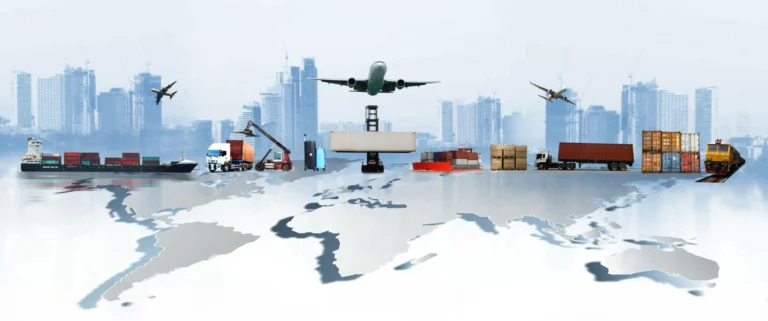
Cross-border freight between the United States and its trading partners moves through a complex web of regulatory checks, tariffs, and documentation. A single customs delay can ripple through supply chains, adding cost and uncertainty. Ruan, a national provider of dedicated transportation and logistics solutions, has stepped into this critical link with the launch of an end-to-end customs brokerage service.
The newly introduced offering brings customs clearance fully in-house, enabling Ruan to manage everything from classification and duty calculation to release documentation and compliance for its customers’ cross-border shipments. By internalizing these processes, the company aims to give shippers a single point of accountability and reduce handoffs that often slow down border crossings.
Inside the New Customs Brokerage Service
Customs brokerage involves navigating federal regulations, preparing entry documents, calculating and paying duties, and ensuring cargo meets import requirements. Ruan’s service covers these functions for goods moving primarily between the United States, Mexico, and Canada. The company’s team of licensed customs brokers will handle filings with U.S. Customs and Border Protection and other agencies, leveraging their expertise to reduce errors and expedite clearances.
Shippers gain access to real-time visibility into their shipments’ customs status and can expect consolidated billing for transportation and brokerage fees. This integrated approach eliminates the need to coordinate with separate third-party brokers, a friction point that can lead to miscommunication and unexpected delays. Maintaining a single power of attorney across both logistics and brokerage also streamlines the administrative burden for importers.
Compliance in a Shifting Trade Landscape
Trade policies and security regulations are in constant flux, making compliance a moving target for importers and exporters. The United States–Mexico–Canada Agreement (USMCA) imposes strict rules of origin and documentation requirements, while programs like C-TPAT (Customs-Trade Partnership Against Terrorism) demand robust supply chain security profiles. Ruan’s brokerage unit is designed to keep freight compliant with these frameworks, mitigating the risk of audits, fines, or shipment holds.
For companies that rely on just-in-time manufacturing or high-value components, even a short customs hold can halt production. Ruan’s in-house brokerage brings compliance expertise directly into the planning of cross-border lanes, allowing logistics managers to anticipate regulatory hurdles before cargo reaches the border. The brokers continuously monitor regulatory updates, such as changes to tariff codes or entry filing requirements, to proactively adjust shipping strategies.
Tying Into Existing Ruan Logistics Networks
The brokerage launch dovetails with Ruan’s expansive freight management and dedicated contract carriage operations. As a full-service freight forwarder, the company already coordinates thousands of cross-border moves each year for customers in automotive, manufacturing, and retail sectors. Adding customs clearance removes a final third-party dependency, creating a more seamless door-to-door experience.
Technology integration also plays a role. Ruan’s transportation management platform can now ingest customs status updates alongside shipment tracking, enabling holistic visibility from origin to final delivery. This convergence is expected to improve detention time management at border crossings and give shippers more accurate ETAs. Dedicated fleet operators within the Ruan network will also benefit from faster clearance turnarounds, reducing idle time at border inspection stations.
What It Means for Shippers and the Industry
Shippers grappling with capacity tightness and rising logistics costs may find value in consolidating services under a single provider. Ruan’s move reflects a broader trend among large logistics firms to internalize customs brokerage, a strategy that can yield operational efficiencies and strengthen customer retention. For smaller brokers, it intensifes competition and may push them toward niche specializations or digital-first models.
Nearshoring trends that are driving more manufacturing from Asia to Mexico amplify the demand for reliable cross-border logistics. Ruan’s expansion signals that freight management companies see customs expertise not as an ancillary service but as a core competitive differentiator in the North American market. As the service matures, it could lead to standardized customs processes across multiple customer accounts, potentially lowering per-shipment clearance costs over time and building a rich data pool for predictive supply chain analytics.
Why This Matters
Ruan’s in-house customs brokerage captures the growing industry imperative to simplify complex cross-border trade. By linking clearance directly to transportation management, the move could reduce delays, improve cost predictability, and strengthen supply chain resilience as near-shoring lifts U.S.-Mexico freight volumes.
FAQ
Who is Ruan?
Ruan Transportation Management Systems is a privately held, U.S.-based logistics company providing dedicated contract carriage, freight management, and supply chain solutions across North America.
What exactly is the new service?
It is an end-to-end customs brokerage offering that handles all aspects of customs clearance—documentation, duty payments, classification, and compliance—for cross-border shipments, integrated with Ruan’s transportation services.
When did Ruan launch the customs brokerage?
Ruan announced the launch recently, though no specific effective date was given. It is presumed to be available immediately to existing and new customers.
Why is this significant for cross-border shippers?
It reduces the need to coordinate with separate third-party brokers, potentially speeding up border crossings, lowering administrative burden, and providing a single point of accountability for both transportation and customs.
Sources
- Ruan (ruan.com)
Source: news – FreightWaves