
Oman Soars to 9th in Global Customs Ranking, Boosting Trade Efficiency
The Numbers That Matter
This story is anchored to specific dates or periods such as 2040. Those reference points make it easier to track how the situation develops over time.
- Date / period: 2040 Deepening Industry Context: Oman’s Commitment to Trade Facilitation The ranking aligns with broader national strategies embedded in Oman Vision 2040, which treats logistics as a cornerstone of economic diversification.
Just a few years ago, Oman’s customs procedures were often criticized for lengthy processing times and bureaucratic delays. Today, the narrative has flipped completely: the Sultanate now ranks 9th worldwide in customs clearance performance, according to the latest international assessment. The dramatic improvement places Oman ahead of many advanced economies and underscores a deliberate national push to modernize trade logistics.
The Leap in Global Rankings
Climbing into the top ten represents a multi-year effort to overhaul legacy systems. While exact previous standings are not detailed in the latest release, officials and trade analysts confirm a steady upward trajectory from a mid-table position. The 9th-place finish is widely regarded as a breakthrough for a middle-income economy, signaling that targeted reforms can deliver measurable gains in short order.
Drivers of Improvement
Several key initiatives fueled the rise. A fully digital customs platform now processes the majority of declarations, eliminating paper-based bottlenecks. Risk-based inspection programs allow compliant shipments to clear quickly while focusing enforcement resources on high-risk consignments. The introduction of a single-window system has integrated multiple regulatory agencies, cutting duplicate document submissions and manual cross-referencing.
- Automated processing: Electronic data interchange reduces manual entry errors and accelerates document verification.
- Risk management: Smart targeting algorithms separate low-risk cargo for expedited release.
- Interagency coordination: Ports, customs, health authorities, and standards bodies share a unified platform.
- Pre-arrival clearance: Importers submit documents before goods land, enabling discharge-time release.
Impact on Trade and Logistics
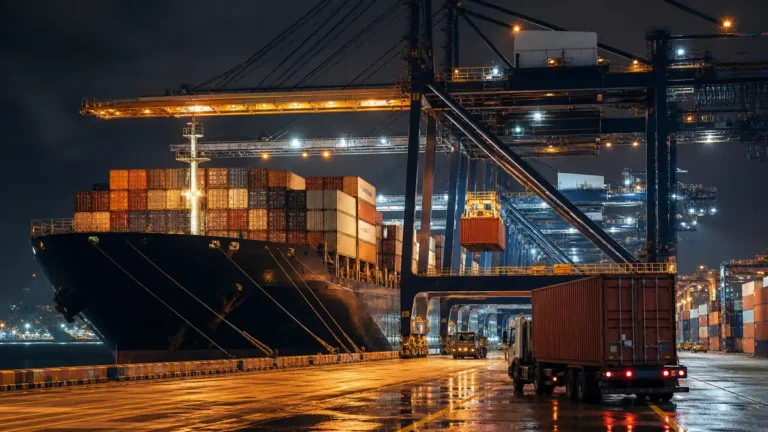
Faster clearance times translate directly into lower inventory carrying costs and more reliable supply chains. Retailers and manufacturers dependent on just-in-time deliveries stand to benefit most, as dwell time at ports and airports shrinks. The enhanced predictability makes Oman a more attractive gateway for regional distribution, particularly to Gulf Cooperation Council markets and East Africa.
Companies relying on customs clearance from China to Oman will find the streamlined process particularly beneficial, whether they choose air freight DDP from China to Muscat or sea freight DDP from China to Muscat. The removal of administrative friction reinforces door-to-door delivery models that are increasingly popular with e-commerce and industrial shippers.
Deepening Industry Context: Oman’s Commitment to Trade Facilitation
The ranking aligns with broader national strategies embedded in Oman Vision 2040, which treats logistics as a cornerstone of economic diversification. Over the past five years, the government has invested heavily in expanding port capacity, upgrading airport cargo terminals, and training customs officers in international best practices. These efforts are benchmarked against standards set by the World Customs Organization and the Trade Facilitation Agreement of the World Trade Organization.
On the ground, the results are visible. At Sohar Port, average container release times have fallen sharply. Salalah Free Zone reports a surge in re-export activity as traders leverage Oman’s efficient clearance to serve global supply chains. For a country that imports the majority of its consumer goods and industrial inputs, such gains ripple across every sector of the economy.
Key Performance Indicators at a Glance
| Aspect | Details |
|---|---|
| Global Rank | 9th in customs clearance performance internationally |
| Driving Factors | Digital customs platform, risk-based inspections, single-window integration |
| Impact on Clearance Time | Significant reduction in dwell time at ports and airports |
| Business Benefits | Lower logistics costs, faster inventory turnover, enhanced supply chain predictability |
| Future Outlook | Continued investment in trade infrastructure and technology adoption |
Cautious Note on Sustaining Momentum
Despite the accolades, challenges remain. The ranking reflects a snapshot in time, and regional competitors are rapidly upgrading their own customs systems. Maintaining a top-ten position will require ongoing investment in technology, workforce development, and interagency cooperation. Moreover, unconfirmed reports suggest that some small and medium enterprises still struggle to navigate the digital interface, pointing to a need for deeper user support. The government has not yet released a detailed roadmap for the next phase of reforms, leaving questions about how it will cement these hard-won gains.
Why This Matters
This leap into the top ten is more than a ranking trophy—it directly strengthens Oman’s position in global supply chains. For importers and logistics providers, the efficient clearance reduces operational costs and transit uncertainty, making Oman a compelling alternative to traditionally dominant routes through larger neighboring hubs. It also sends a strong signal to foreign investors that the country is serious about trade facilitation and economic diversification.
FAQ
What does the 9th global ranking mean for businesses importing into Oman?
It signals that customs procedures are now among the fastest and most predictable worldwide. Importers can expect reduced clearance times, lower storage fees, and more reliable delivery schedules, which translate into cost savings and improved inventory management.
How did Oman achieve such a high rank in customs clearance?
The improvement is driven by a fully digital customs platform, risk-based cargo inspection systems, a single-window interface that connects all regulatory agencies, and pre-arrival clearance procedures. These reforms eliminate paperwork, reduce human error, and speed up the release of compliant shipments.
Which report or organization ranks Oman 9th globally?
While the official announcement from Muscat Daily did not specify the exact index, such rankings typically come from international bodies like the World Bank’s Doing Business report or the World Customs Organization, which evaluate trade efficiency, document requirements, and clearance speed.
Will this ranking affect shipping costs for goods from China to Oman?
Indirectly, yes. Efficient customs clearance lowers the overall cost of logistics by reducing demurrage, detention, and expediting fees. Freight forwarders offering door-to-door services from China, including DDP air and sea options, can pass these savings on to clients through more competitive rates and faster cycle times.
Sources
- Oman Customs (customs.gov.om)
- Ministry of Commerce, Industry and Investment Promotion (moci.gov.om)
Source: Muscat Daily