
Major Carriers Slash Charter Reliance with Fleet Expansion Spree
Key Figures
This story is anchored to specific dates or periods such as 2020–2022. Those reference points make it easier to track how the situation develops over time.
- Date / period: 2020–2022 Market Context Freight Images (15) The shift is rooted in the extraordinary financial windfall that container lines captured during the supply-chain disruptions of 2020–2022.
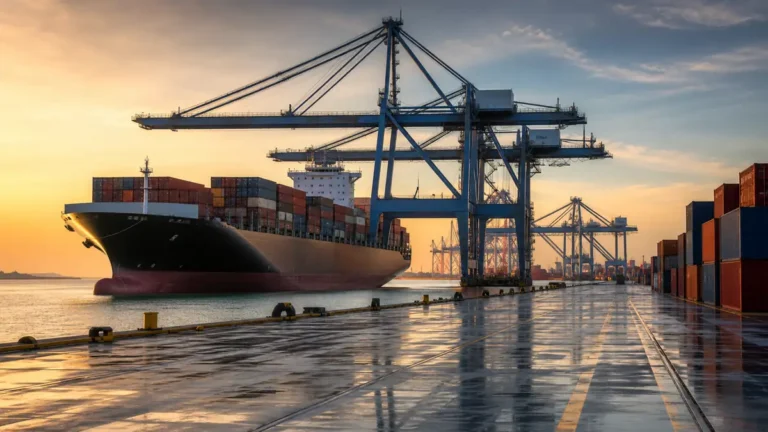
Container shipping lines are dramatically reducing their dependence on chartered vessels, channeling billions into owned tonnage. The operational upshot is a tighter grip on capacity deployment and a longer-term cost structure that insulates them from the notoriously cyclical charter market.
For decades, the industry leaned on a flexible model—leasing ships from non-operating owners—to absorb demand swings without the balance-sheet weight of full ownership. That calculus is now pivoting. Carriers flush with record pandemic-era profits are buying newbuilds and second-hand ships outright, shrinking their chartered-in fleets and reshaping the global supply of available tonnage.
Market Context
The shift is rooted in the extraordinary financial windfall that container lines captured during the supply-chain disruptions of 2020–2022. Freight rates on key routes, including ocean freight from China to North America and Europe, surged to historic highs, generating enormous liquidity. Rather than distributing the bulk of those earnings to shareholders, many of the world’s top carriers have earmarked substantial capital expenditure for fleet acquisition.
Charter rates themselves have been a catalyst. A Maersk executive recently noted that daily hire rates for a mid-sized boxship remain elevated, making it cheaper in the long run to own. At the same time, ordering new capacity provides a hedge against future charter-market spikes that can erode margins.
Technical and Standards Implications
Fleet ownership gives operators direct control over the technology profile of their vessels. This matters as the International Maritime Organization (IMO) tightens its carbon-intensity regulations. Ships ordered today are predominantly designed to meet the Energy Efficiency Existing Ship Index (EEXI) and Carbon Intensity Indicator (CII) requirements, incorporating duel-fuel LNG propulsion, methanol-ready engines, and hull-optimisation features.
Companies like CMA CGM and MSC have placed orders for giant methanol-fuelled boxships, a step that would be harder to coordinate through a patchwork of chartered tonnage. Ownership thus accelerates the fleet’s green transition, but it also concentrates the risk of technology obsolescence on the balance sheet if regulatory standards shift again.
What to Watch Next
The industry’s orderbook-to-fleet ratio has climbed to one of the highest in history. Delivery timelines stretch well into the late 2020s, signalling that the move toward ownership is a multi-year structural change. Analysts warn that if demand growth fails to absorb the incoming capacity, freight rates could soften, but owned vessels at least provide cost certainty.
Another dynamic to monitor is the secondary market for chartered ships. As shipping giants return vessels, non-operating owners may face lower utilisation and reduced charter rates, potentially triggering consolidation among lessors. Independent owners that have long supplied the industry’s swing capacity are likely to see their role diminish.
The charter-to-ownership pivot is also visible in the freight markets serving major production hubs. For shippers booking ocean freight from China, the expanding fleets of the largest carriers promise more stable sailing schedules and possibly more competitive long-term contract rates, though spot volatility may remain.
Broader implications: The shift deepens the moat around the top-tier carriers, who can finance multi-billion-dollar newbuilding programs, while smaller players may be squeezed. It could also alter the dynamics of vessel-sharing alliances, making partners less reliant on each other’s chartered-in slots. In an industry defined by cycles, the move to own rather than rent marks a generational strategic reorientation.
| Aspect | Chartering | Fleet Ownership |
|---|---|---|
| Capital requirement | Low upfront cost; periodic hire payments | High initial outlay for newbuilds or acquisitions |
| Operational control | Limited; subject to owner terms | Full; capacity and scheduling entirely in-house |
| Cost predictability | Exposed to market rate swings | Stable, depreciates over vessel life |
| Technology adoption | Slower; fragmented across owners | Rapid; uniform deployment of green tech |
| Balance-sheet risk | Low asset risk | High; obsolescence and impairment risk |
| Current industry trend | Shrinking share of fleet | Orderbook share at historically high levels |
Why This Matters
The shift from chartering to ownership concentrates market power among cash-rich giants, raises barriers for smaller competitors, and aligns vessel procurement with decarbonisation goals. It could stabilise long-haul freight rates while introducing overcapacity risks that might eventually depress earnings, remaking the investment profile of the entire ocean freight sector.
FAQ
Who is leading the shift from chartering to fleet ownership?
The world’s largest container carriers—such as Maersk, MSC, and CMA CGM—are at the forefront, leveraging massive profits to buy newbuilds and second-hand tonnage.
What does this shift mean for the charter market?
Non-operating owners face reduced demand and downward pressure on charter rates, which could lead to consolidation among lessors and a permanent reduction in the chartered fleet’s role.
How does fleet ownership affect shipping technology and emissions?
It allows carriers to rapidly deploy modern, fuel-efficient vessels that meet IMO carbon-intensity rules, accelerating the industry’s green transition but concentrating technology risk.
When will the impact of this trend become visible in freight rates?
Effects are already emerging as owned capacity grows, but the full impact on long-term freight rates will unfold as newbuilds deliver through the late 2020s, potentially stabilising contract rates while spot markets adjust.
Sources
- Maersk (maersk.com)
- CMA CGM (cma-cgm.com)
- MSC (msc.com)
- International Maritime Organization (imo.org)
Source: Global Trade Magazine