
Air France-KLM Cargo Results Highlight AI Hardware’s Growing Role in Air Freight
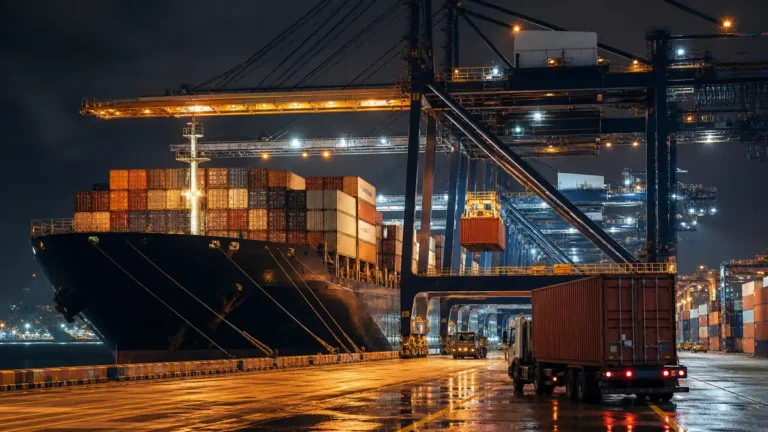
Air France-KLM’s freight division has delivered a performance that surpassed market projections, a development that is being interpreted as a clear signal of how artificial intelligence infrastructure is reshaping global air cargo flows. While the company did not release immediate granular figures, the beat itself has drawn attention to the changing composition of goods moving through major air hubs.
Cargo Division Defies a Challenging Macro Environment
The Franco-Dutch airline group’s cargo arm has been navigating a period of softening demand in traditional segments. Across the industry, the explosive growth in e-commerce that characterized the early 2020s has cooled, leaving many carriers with excess capacity. Against this backdrop, Air France-KLM’s ability to outperform expectations suggests that new demand streams are emerging to fill the void.

Industry observers note that the cargo unit’s resilience is not purely a matter of operational efficiency. Instead, it reflects a broader rebalancing of the air freight market, one that is increasingly tilted toward high-value, time-sensitive technology products.
The E-Commerce Slowdown Leaves a Capacity Gap
For nearly two years, air cargo was buoyed by a surge in online shopping, with retailers rushing to restock inventories and meet consumer demand. That trend has since moderated, as inflation and shifting spending patterns prompted a return to pre-pandemic buying habits. Freight forwarders and carriers have been searching for new sources of volume to maintain load factors and yields.
The slowdown has been especially pronounced on routes from Asian manufacturing centers to North America and Europe, where the majority of e-commerce parcels are generated. Capacity that was once booked solid for consumer goods is now being repurposed for industrial and enterprise shipments.
AI Hardware Emerges as a Critical Air Cargo Client
One of the most significant new demand drivers is the transport of artificial intelligence servers, graphics processing units (GPUs), and associated networking equipment. These components are not only expensive but also essential to the expansion of data centers around the world. Their value density and sensitivity to delays make air freight the preferred mode of shipment, often on dedicated freighters or in the bellies of passenger aircraft.
Major technology firms and cloud service providers are accelerating deployments of AI infrastructure, leading to a steady flow of hardware from production hubs in Asia to data centers in Europe, the Middle East, and North America. Air France-KLM’s route network, which includes key gateways such as Paris Charles de Gaulle and Amsterdam Schiphol, is well positioned to capture a share of these flows.
Industry Context: High-Value Shipments Drive Freighter Demand
The shift toward AI hardware is reshaping not only demand patterns but also the types of aircraft and logistics services that are in demand. Freight forwarders are increasingly booking entire freighter charters for large-scale AI infrastructure projects, while integrators are investing in specialized handling for sensitive electronic components.
According to the International Air Transport Association (IATA), global air cargo capacity has recovered to pre-pandemic levels, but the composition of goods has evolved. High-tech cargo, including semiconductors and server racks, now accounts for a growing share of revenue ton-kilometers. This trend is expected to persist as nations and corporations prioritize sovereign AI capabilities and next-generation computing.
For Air France-KLM, the cargo beat is not merely a one-off event but a potential structural tailwind. The group has been modernizing its freighter fleet and expanding partnerships with global logistics providers to handle complex technology shipments. Compliance with export controls and security protocols for advanced hardware adds a layer of complexity that favors established, experienced carriers.
| Aspect | Details |
|---|---|
| Trigger Event | Air France-KLM cargo unit beats performance forecasts |
| Primary Driver | Surge in AI hardware (servers, GPUs) shipments by air |
| E-Commerce Context | Slowing growth leaves capacity gap filled by tech cargo |
| Key Routes | Asia to Europe/North America production-to-data-center flows |
| Operational Impact | Higher demand for freighter services, specialized handling |
| Industry Outlook | Structural shift toward high-value, time-sensitive goods |
Questions for the Forwarding Sector
As carriers like Air France-KLM adapt to this new demand profile, the wider freight forwarding community will need to assess how durable the AI hardware trend truly is. Will the current pace of AI infrastructure buildout sustain air cargo volumes through the coming quarters, or is this a temporary spike that will fade as data center construction reaches saturation? The answer could determine investment strategies, fleet planning, and rate negotiations across the global air freight market.
Why This Matters
The Air France-KLM cargo beat signals a strategic realignment in air freight, where AI infrastructure shipments are filling the void left by cooling e-commerce. This shift could provide a long-term revenue base for carriers and forwarders, while also raising questions about network optimization and freighter capacity in a market increasingly driven by enterprise tech cycles rather than consumer spending.
FAQ
What did Air France-KLM's cargo performance indicate?
The cargo unit exceeded expectations, highlighting how shipments of AI hardware are compensating for declining e-commerce volumes in air freight.
Why is e-commerce air freight slowing down?
After a pandemic-driven boom, consumer spending has shifted back to services, and retailers have adjusted inventory levels, reducing the need for urgent air deliveries of consumer goods.
What types of AI hardware are typically shipped by air?
High-value, time-sensitive components such as servers, GPUs, networking switches, and specialized chips often move by air freight to meet data center construction deadlines.
How does the shift to AI hardware affect freight forwarders?
Forwarders are seeing increased demand for charter services and specialized handling, but they also need to adapt to compliance and documentation requirements that differ from traditional e-commerce cargo.
Sources
- Air France-KLM (airfranceklm.com)
- Amsterdam Schiphol (schiphol.nl)
- International Air Transport Association (iata.org)
Source: Tech Times