
Global Air Freight Logistics Market Poised to Surpass $575 Billion
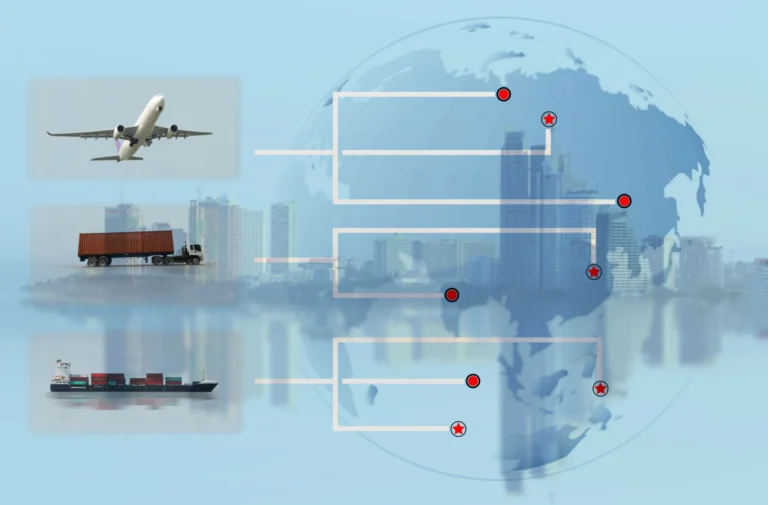
Capacity planners and logistics managers are re-evaluating their strategies as a fresh forecast places the global air freight logistics service market at an estimated $575.31 billion. The projection, detailed in a press release on openPR.com, signals sustained pressure on available cargo space and a need for shippers to lock in reliable freight partnerships.
Shippers Brace for Capacity Tightness
Forwarders are already reporting elevated booking activity on key lanes. The surge is being fueled by just-in-time manufacturing cycles and e-commerce demand that leaves little room for error. Companies without long-term agreements face spot rates that remain well above historical averages.
Operational teams at major logistics providers are extending handling hours and adding charter flights to meet contractual commitments. This environment rewards shippers who can commit to volume and schedule regularity, while smaller cargo owners encounter limited routing options.
The $575.31 Billion Projection Explained
The headline figure originates from an air freight logistics service market analysis shared on openPR.com. It encompasses transportation, warehousing, and ancillary services provided by integrated carriers and freight forwarders worldwide. The report underscores how the sector has expanded beyond traditional air cargo to include express parcels and temperature-controlled pharma shipments.
While the exact base year and forecast period were not disclosed in the press release, the value represents a total addressable market that analysts see growing on the back of several structural changes. The projection aligns with broader industry observations from bodies like the International Air Transport Association, which notes that air cargo demand has been trending upward in recent cycles.
Key Trade Corridors and Regional Shifts
Geographic distribution of this market remains uneven. Routes connecting manufacturing hubs in Asia with consumer markets in North America and Europe account for a large share of flown tonnes. Heavily utilized trade lanes such as air freight from China to the US and Europe are particularly sensitive to capacity changes.
China to USA air freight rates have seen persistent volatility as importers compete for limited belly and freighter space. Similarly, corridors linking China to the UK and the UAE reflect the dual influence of retail replenishment and industrial supply restocking. Intra-Asia routes are also expanding, driven by component movements within regional supply chains.
Airlines and all-cargo operators continue to adjust their networks in response to these flows. Secondary airports in Asia and the Middle East are gaining traffic as hub congestion forces operators to consider alternatives. This realignment is reshaping the competitive dynamics among logistics hubs worldwide.
| Factor | Details | Significance |
|---|---|---|
| Projected Market Value | $575.31 billion | Indicates robust global demand for air logistics services |
| Primary Growth Drivers | E-commerce expansion, just-in-time manufacturing, pharmaceutical distribution | Shifts transport mix toward premium freight modes |
| Key Operational Impact | Tight capacity on major trade lanes, elevated spot rates | Forces shippers to secure long-term capacity agreements |
| Major Trade Corridors | Asia–North America, Asia–Europe, intra-Asia | Concentrates infrastructure investment and network development |
| Regulatory and Sustainability Focus | Emissions reporting, carbon offset schemes, efficiency mandates | May increase operating costs and influence carrier selection |
Strategic Implications for Supply Chains
Corporate supply chain leaders are interpreting the market size milestone as a call to diversify transport modes where possible. Some are redirecting lower-margin goods to ocean freight or rail, reserving air lift for high-value or time-critical inventory. Others are deepening their ties with integrated carriers to secure guaranteed uplift.
The growth also brings fresh attention to sustainability pressures. Air freight produces significantly more emissions per tonne-kilometre than surface transport, drawing regulatory interest in efficiency measures and carbon offset programmes. This dimension may influence procurement decisions as shippers factor environmental criteria into carrier selection.
The sheer scale of the projected market—over half a trillion dollars—illustrates how deeply air freight is embedded in modern commerce. As digital trade platforms proliferate and delivery expectations tighten, the logistics industry must reconcile speed, cost, and environmental accountability in an increasingly demanding landscape.
Key Figures
This story includes concrete figures such as $575.31 billion. The points below pull out the key numbers so the reporting is easier to scan and verify.
- Projected Market Size: $575.31 billion The air freight logistics service market is forecast to reach this value, according to an openPR.com press release.
Why This Matters
The $575.31 billion figure crystallizes the scale at which air freight enables global trade, but it also casts a spotlight on the sector's operational fragility. Airlines and forwarders must invest in digital visibility tools and flexible capacity while regulators watch environmental performance. For importers and exporters, the number signals that relying solely on spot-market cargo space is risky; proactive procurement and multi-modal planning are becoming prerequisites for supply chain resilience.
FAQ
Who released the $575.31 billion air freight market projection?
The figure appeared in a press release on openPR.com, a press release distribution service. The original research firm was not named in the available excerpt.
What services are included in the air freight logistics market?
The market covers end-to-end air cargo transportation, warehousing, customs brokerage, and express parcel delivery provided by integrated carriers and independent forwarders.
How does this projection affect small and medium-sized shippers?
They may face tighter capacity and higher rates as large freight buyers lock in available space. SMEs benefit from using forwarders that consolidate shipments to access better rates and routing.
What role does e-commerce play in this market expansion?
E-commerce fuels demand for rapid international delivery, intensifying the use of air freight for cross-border parcels and replenishment of fulfillment centers, which drives up overall market value.
Sources
- openPR.com (openpr.com)
- International Air Transport Association (iata.org)
Source: openPR.com